
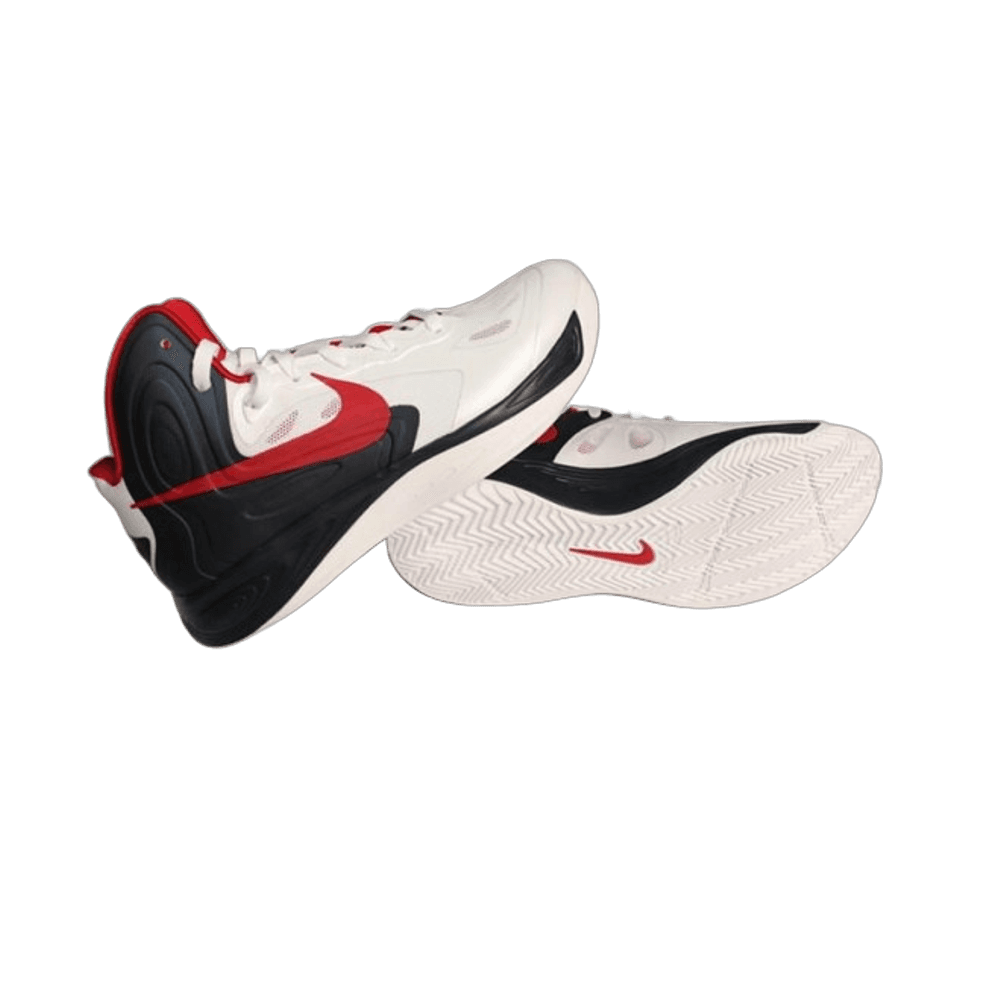
Analysis
Performance profile
| Cushioning Feel | 75 / 100 · Very Good |
|---|---|
| Court Feel | 78 / 100 · Very Good |
| Bounce | 50 / 100 · Decent |
| Stability | 68 / 100 · Good |
| Traction | 72 / 100 · Good |
| Fit | 82 / 100 · Very Good |
Cushioning Feel
75Court Feel
78Bounce
50Stability
68Traction
72Fit
82Is it for you?
If you like a blacktop-proof XDR outsole built to survive outdoor courts, and can live with a thin, segmented tongue that lets the laces dig in when cinched, then this shoe is for you.
Forefoot midsole tech
Phylon midsole + forefoot Zoom Air
Heel midsole tech
Phylon midsole
Outsole tech
Rubber with multi-directional traction
Upper tech
Hyperfuse fused upper (lighter mesh + TPU film)
Cushioning feel
responsive and low-profile
Court feel
moderate-high
Bounce
limited-moderate
Stability
moderate-good
Traction
good
Fit
true to size, snug
Pro reviews
Paraphrased highlights from sneaker reviewers — not verbatim quotes.
No pro reviews yet
Context
Story & provenance
A Lighter Take Loses Heel Zoom
The 2012 Hyperfuse arrived as the trimmed-down middle entry in Nike's Hyperfuse trilogy. Where the 2011 model packed both forefoot and heel Zoom, the 2012 stripped the heel unit, leaving forefoot Zoom Air on top of Phylon for a quicker, more guard-oriented setup. The Hyperfuse upper carried over but in a lighter, more flexible execution, and the outsole moved toward a busier multi-directional pattern. Reviewers were mixed: the shoe felt fast and stable, but losing the heel Zoom meant noticeably less impact protection for bigger players. Plenty of NBA team players still wore it, and college programs ordered it in droves. It sits as a snapshot of Nike's early-decade philosophy: cheaper team-shoe construction that prioritized fit and traction over premium cushioning.
Your rating
Rate every dimension to save
- Cushioning feel0.0
- Court feel0.0
- Bounce0.0
- Stability0.0
- Traction0.0
- Fit0.0
Sign in to rate
Smart size advisor
PremiumSign in and, with your foot scan, Pro/Max works out exactly what size to buy in this shoe.
Log in