Log in or sign up for the full sneakerfeature experience.
Nike · 2018
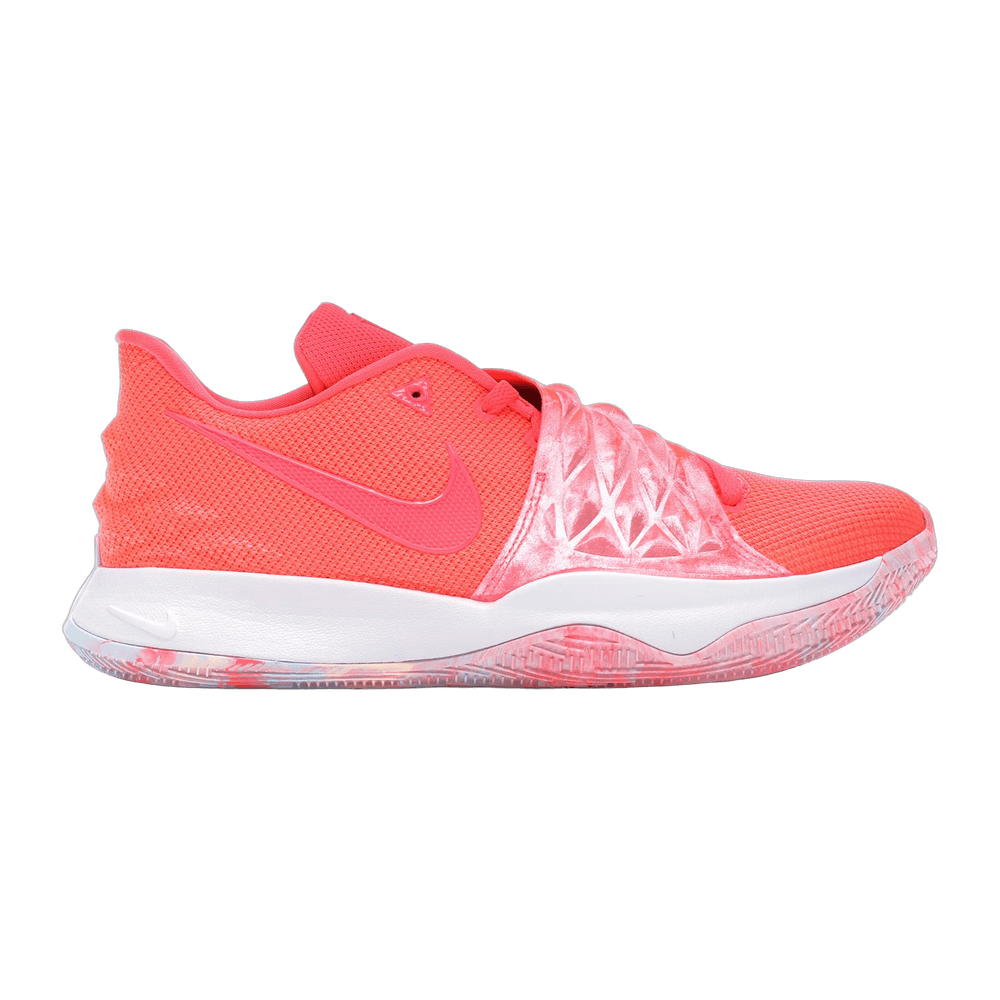
Kyrie Low 1
No playstyle summary available yet.
2.5
By dimension
Cushioning feel
2.0
Court feel
5.0
Bounce
3.0
Stability
3.0
Traction
4.5
Fit
1.0
Analysis
Performance profile
Performance scores
Cushioning Feel
58 / 100 · Solid
Court Feel
98 / 100 · Elite
Bounce
58 / 100 · Solid
Stability
74 / 100 · Good
Traction
88 / 100 · Excellent
Fit
67 / 100 · Good
Cushioning Feel
58Solid
Court Feel
98Elite
Bounce
58Solid
Stability
74Good
Traction
88Excellent
Fit
67Good
Is it for you?
If you like a true low-cut, ground-hugging build made for shifty guards, and can live with soft gum rubber that wears fast and dies outdoors, then this shoe is for you.
a true low-cut, ground-hugging build made for shifty guards
soft gum rubber that wears fast and dies outdoors
Forefoot midsole tech
forefoot Zoom Air
Heel midsole tech
heel foam carrier
Outsole tech
aggressive low-profile traction
Upper tech
mesh/Fuse low-cut upper
Cushioning feel
firm and quick
Court feel
excellent
Bounce
moderate
Stability
good
Traction
very good
Fit
very snug, minimal, guard-focused
Pro reviews
Paraphrased highlights from sneaker reviewers — not verbatim quotes.
YouTube1 / 3
WearTesters
Kyrie Low 1 is an upgrade over the original Kyrie 1 with improved traction and material durability, but inconsistent cushioning and rounded outsole limit defensive stability, making it better suited for shifty, ball-handling-focused guards like Kyrie Irving
Traction is solid indoors after breaking in, with multi-directional pattern providing good directional control and maneuverability
Mesh upper reinforced with nylon lining improves durability and prevents early blowout, a common issue in takedown models
Inconsistent cushioning experience—reviewer couldn't feel Zoom impact despite heel and forefoot units, while a friend's black pair felt springy and comfortable
Rounded outsole compromises stability and feel underfoot; not ideal for players who need to plant their feet; dust accumulates in traction pattern and is difficult to clean
Kyrie Low 1 is a well-designed, affordably-priced low-top basketball shoe with excellent outsole traction, but underwhelming cushioning and durability performance
Innovative outsole pattern inspired by Kobe 10, featuring multi-directional nubs and linear elements, providing excellent traction
Reasonable price point at $110, lower than the initially speculated $120, offering good value for money
Outsole rubber is too soft, likely to have poor outdoor durability and susceptible to wear
Cushioning experience is mediocre; despite Nike Zoom units in forefoot and heel, the cushioning feedback is not noticeable enough
Kyrie Low 3 features a retro 1990s Nets-inspired colorway and positions itself as a budget-friendly performance shoe, with strong lockdown and traction as key strengths, making it suitable for guard-type players and Nets fans at $110 retail price, though cushioning and materials are basic and wide-footed players should size carefully
Excellent lockdown and foot containment with front strap design, ideal for guards who need frequent crossovers and lateral movements
Outstanding traction performance with side-wrapping pattern on outsole, performs exceptionally well on outdoor courts
Narrow fit runs tight even half size up, uncomfortable for wide-footed wearers
Basic cushioning setup with only forefoot and heel Zoom, limited impact protection and lacks innovation
Kyrie Low 1 is an upgrade over the original Kyrie 1 with improved traction and material durability, but inconsistent cushioning and rounded outsole limit defensive stability, making it better suited for shifty, ball-handling-focused guards like Kyrie Irving
Traction is solid indoors after breaking in, with multi-directional pattern providing good directional control and maneuverability
Mesh upper reinforced with nylon lining improves durability and prevents early blowout, a common issue in takedown models
Inconsistent cushioning experience—reviewer couldn't feel Zoom impact despite heel and forefoot units, while a friend's black pair felt springy and comfortable
Rounded outsole compromises stability and feel underfoot; not ideal for players who need to plant their feet; dust accumulates in traction pattern and is difficult to clean
Kyrie Low 1 is a well-designed, affordably-priced low-top basketball shoe with excellent outsole traction, but underwhelming cushioning and durability performance
Innovative outsole pattern inspired by Kobe 10, featuring multi-directional nubs and linear elements, providing excellent traction
Reasonable price point at $110, lower than the initially speculated $120, offering good value for money
Outsole rubber is too soft, likely to have poor outdoor durability and susceptible to wear
Cushioning experience is mediocre; despite Nike Zoom units in forefoot and heel, the cushioning feedback is not noticeable enough
Kyrie Low 3 features a retro 1990s Nets-inspired colorway and positions itself as a budget-friendly performance shoe, with strong lockdown and traction as key strengths, making it suitable for guard-type players and Nets fans at $110 retail price, though cushioning and materials are basic and wide-footed players should size carefully
Excellent lockdown and foot containment with front strap design, ideal for guards who need frequent crossovers and lateral movements
Outstanding traction performance with side-wrapping pattern on outsole, performs exceptionally well on outdoor courts
Narrow fit runs tight even half size up, uncomfortable for wide-footed wearers
Basic cushioning setup with only forefoot and heel Zoom, limited impact protection and lacks innovation
Kyrie Low 1 released in 2018 as the first official Kyrie Low and a purist extension of the line. Nike built it around taking the series' low-riding, traction-led identity to its logical extreme, which says a lot about where the line and the player were at that moment. In community memory, the pair is usually discussed for its speed, court feel and niche appeal for players who wanted even less shoe underfoot. That makes it important beyond simple specs: it captures a specific phase of Nike Basketball thinking about cushioning, containment, weight, durability and visual identity. Collectors still bring it up when later models move in a different direction, and performance-minded hoopers still use it as a reference point for how takedown or low variants can sharpen a line's core philosophy.