Log in or sign up for the full sneakerfeature experience.
Nike · 2005
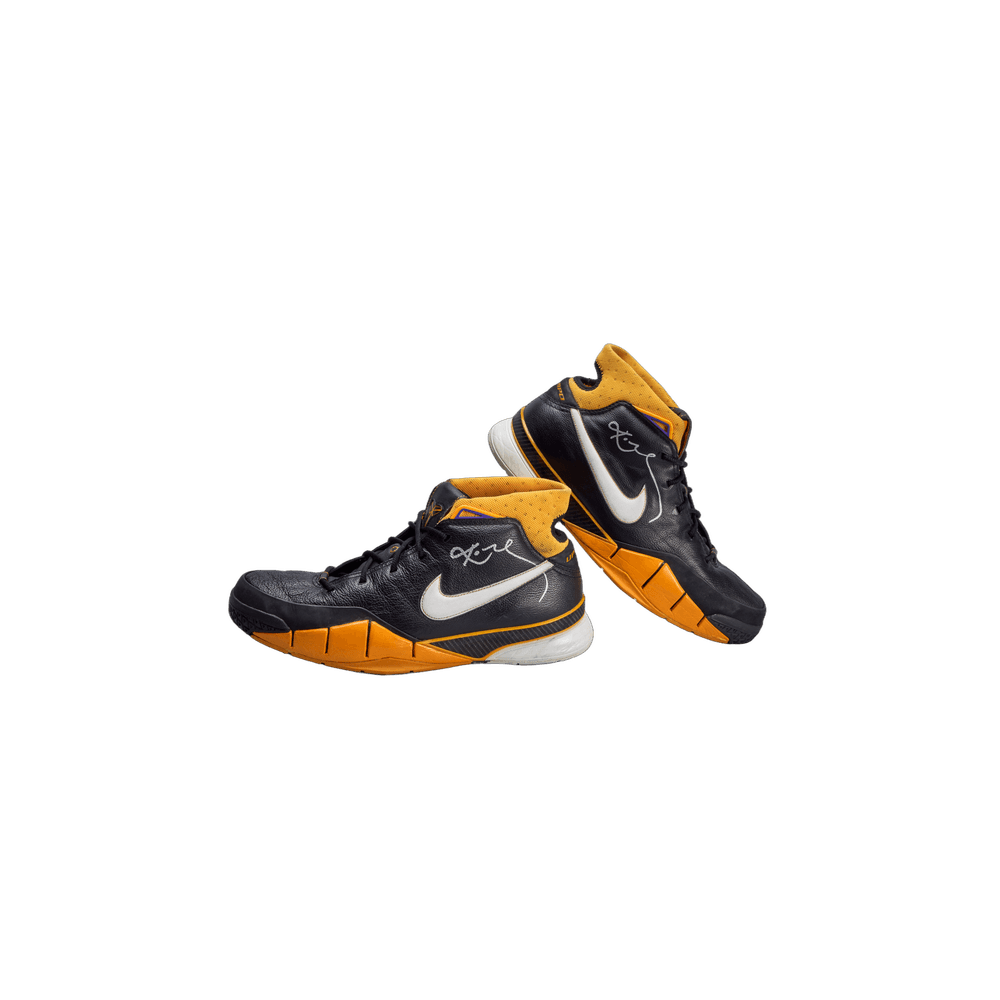
Kobe 1
No playstyle summary available yet.
2.0
By dimension
Cushioning feel
1.0
Court feel
2.5
Bounce
3.0
Stability
5.0
Traction
3.0
Fit
5.0
Analysis
Performance profile
Performance scores
Cushioning Feel
48 / 100 · Decent
Court Feel
64 / 100 · Solid
Bounce
58 / 100 · Solid
Stability
92 / 100 · Excellent
Traction
72 / 100 · Good
Fit
98 / 100 · Elite
Cushioning Feel
48Decent
Court Feel
64Solid
Bounce
58Solid
Stability
92Excellent
Traction
72Good
Fit
98Elite
Is it for you?
If you like gold-standard sticky herringbone that brushes off dust and just grips, and can live with stiff, bulky and disconnected until the leather breaks in, then this shoe is for you.
gold-standard sticky herringbone that brushes off dust and just grips
stiff, bulky and disconnected until the leather breaks in
Forefoot midsole tech
forefoot Zoom Air
Heel midsole tech
heel Zoom Air
Outsole tech
solid rubber with Huarache-era control
Upper tech
full-grain leather upper; carbon-fiber support
Cushioning feel
firm-protective old-school feel
Court feel
moderate
Bounce
moderate
Stability
high
Traction
good
Fit
secure, premium, heavier than later Kobes
Pro reviews
Paraphrased highlights from sneaker reviewers — not verbatim quotes.
Bilibili1 / 3
melo的篮球日常
The blogger recommended multiple cost-effective shoes but did not elaborate much on Kobe 1, only mentioning design characteristics of the Kobe series overall
Kobe 6 is the most handsome shoe in the entire series with very classic design
Kobe 5 retro version updated configuration to adapt to modern basketball offensive concepts
Kobe 6 has the highest threshold to master, not suitable for everyone
The video lacks detailed introduction of Kobe 1's specific configuration and performance advantages
Kobe 1 Pro is a classically designed but performance-outdated retro, suitable for collecting and light wear, not recommended for high-intensity on-court play
Classic bold design with clean straight-line language and powerful aesthetic, showcasing designer Ken Link's unique signature style
Well-configured with full-length Zoom cushioning providing smooth propulsion feedback and reliable stability for shooting and paint contact
Mobility clearly lags modern basketball shoes; front forefoot flex grooves are cut off by full-length Zoom, with significant performance gap during intense continuous running in later fatigue stages
Overly traditional heel design with sharp-angled trapezoidal shape results in flat ground feel lacking rolling sensation, insufficient lateral agility for crossover movements
The Kobe 1 is an outdoor-focused basketball shoe with strong outdoor traction and good overall comfort, but suffers from excessive weight, significant bunion discomfort, and poor indoor court traction, making it unsuitable for indoor play
Excellent traction on outdoor cement courts with no slipping issues
High overall comfort except for the bunion area, with thick padding and no friction problems when worn
Extremely heavy at 515g for size 44.5, negatively impacting feel, particularly problematic above 500g
Poor traction on indoor wooden courts with significant slipping risk, unsuitable for indoor use
The Kobe 1 Protro City of Champions is a well-designed performance basketball shoe with excellent cushioning and durability, but buyers should expect material degradation with wear
Excellent design and colorway (City of Champions), comes with two sets of laces providing versatile styling options
Upgraded cushioning and support system with full-length Zoom Air unit and optimized carbon fiber plate for improved ground feel and forefoot flexibility
Cracked leather portions on toe and Swoosh are prone to fading, peeling, and cracking over time despite warning tag included
Premium-priced version compared to original Kobe 1, commands a higher price point despite using similar materials as standard releases
The Kobe 1 Pro exemplifies expectation versus reality—while internal padding is more comfortable than anticipated, wimpy laces and unforgiving upper materials in stress areas result in a frustrating overall wearing experience.
Substantial internal padding throughout the shoe provides surprising comfort that exceeded expectations
Heel counter hook design makes putting on and taking off the shoe very convenient and comfortable
Laces are too flimsy to lock down properly, making it difficult to achieve a secure fit even with effort
Irritation occurs on the forefoot and heel counter areas during inversion and push-off movements, particularly problematic during lateral motion
The Nike Kobe 1 Protro in 81-point game colorway delivers excellent overall performance with traction and cushioning both scoring 9-9.5/10, remaining a competitive classic basketball shoe suitable for various player types and play styles.
Traction is bulletproof with herringbone pattern that performs amazingly on clean or dirty courts; excellent durability with no wear after 16 hours of play.
Upgraded to full-length Zoom Air cushioning in midsole; tapered forefoot provides better court feel while maintaining impact protection; performs competitively with modern shoes.
Traditionally a heavy basketball shoe, though Protro version attempts to reduce weight.
Video does not explicitly detail significant drawbacks beyond the shoe's heritage as a 2006-2007 design.
The Kobe 1 Protro City of Champions is a well-designed performance basketball shoe with excellent cushioning and durability, but buyers should expect material degradation with wear
Excellent design and colorway (City of Champions), comes with two sets of laces providing versatile styling options
Upgraded cushioning and support system with full-length Zoom Air unit and optimized carbon fiber plate for improved ground feel and forefoot flexibility
Cracked leather portions on toe and Swoosh are prone to fading, peeling, and cracking over time despite warning tag included
Premium-priced version compared to original Kobe 1, commands a higher price point despite using similar materials as standard releases
The Kobe 1 Pro exemplifies expectation versus reality—while internal padding is more comfortable than anticipated, wimpy laces and unforgiving upper materials in stress areas result in a frustrating overall wearing experience.
Substantial internal padding throughout the shoe provides surprising comfort that exceeded expectations
Heel counter hook design makes putting on and taking off the shoe very convenient and comfortable
Laces are too flimsy to lock down properly, making it difficult to achieve a secure fit even with effort
Irritation occurs on the forefoot and heel counter areas during inversion and push-off movements, particularly problematic during lateral motion
The Nike Kobe 1 Protro in 81-point game colorway delivers excellent overall performance with traction and cushioning both scoring 9-9.5/10, remaining a competitive classic basketball shoe suitable for various player types and play styles.
Traction is bulletproof with herringbone pattern that performs amazingly on clean or dirty courts; excellent durability with no wear after 16 hours of play.
Upgraded to full-length Zoom Air cushioning in midsole; tapered forefoot provides better court feel while maintaining impact protection; performs competitively with modern shoes.
Traditionally a heavy basketball shoe, though Protro version attempts to reduce weight.
Video does not explicitly detail significant drawbacks beyond the shoe's heritage as a 2006-2007 design.
Kobe 1 released in 2005 as Kobe Bryant's first true Nike signature after the transition from adidas. Nike built it around a premium leather build with serious support and a more traditional performance philosophy before the line went low and minimal, which says a lot about where the line and the player were at that moment. In community memory, the pair is usually discussed for its Christmas-day debut, 81-point-era associations and retro prestige. That makes it important beyond simple specs: it captures a specific phase of Nike Basketball thinking about cushioning, containment, weight, durability and visual identity. Collectors still bring it up when later models move in a different direction, and performance-minded hoopers still use it as a reference point for how far the Kobe line eventually moved away from its own starting point.