Log in or sign up for the full sneakerfeature experience.
Nike · 2010
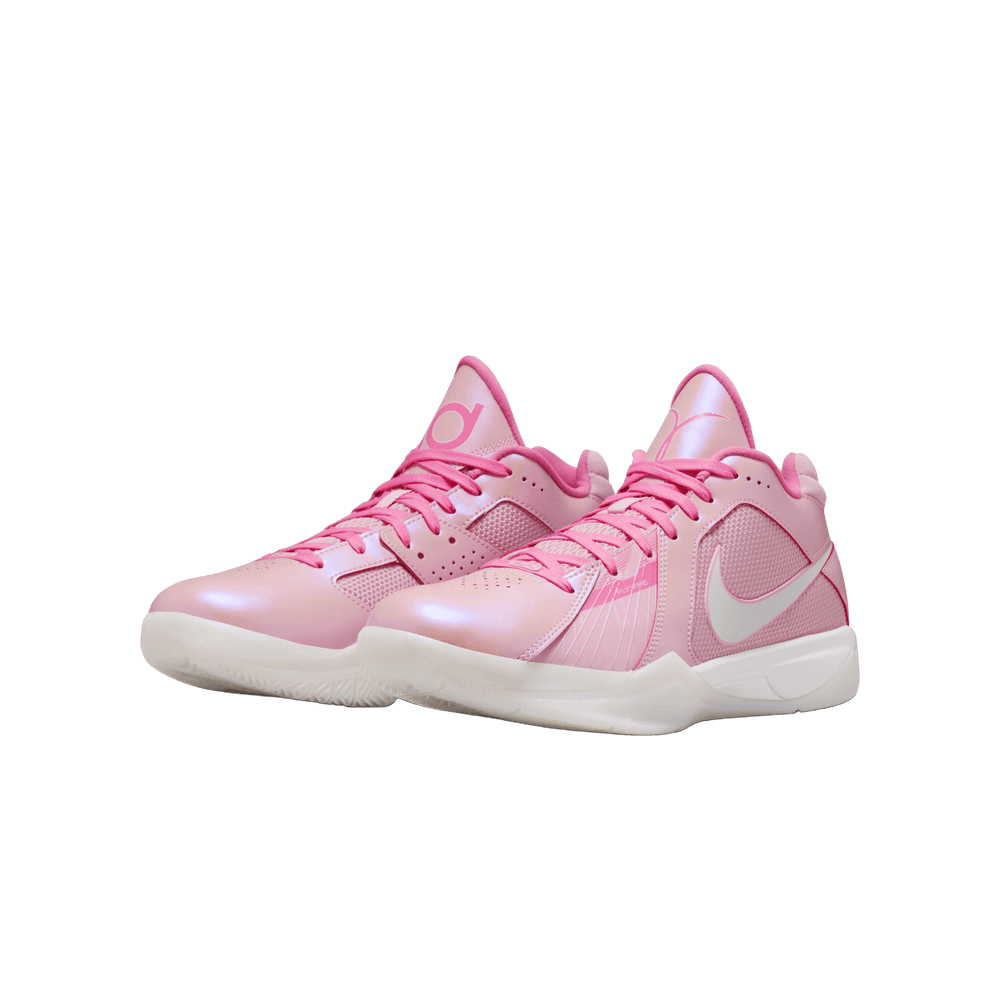
KD 3
No playstyle summary available yet.
3.0
By dimension
Cushioning feel
3.0
Court feel
4.0
Bounce
3.0
Stability
3.0
Traction
3.0
Fit
4.5
Analysis
Performance profile
Performance scores
Cushioning Feel
75 / 100 · Very Good
Court Feel
82 / 100 · Very Good
Bounce
58 / 100 · Solid
Stability
74 / 100 · Good
Traction
72 / 100 · Good
Fit
94 / 100 · Excellent
Cushioning Feel
75Very Good
Court Feel
82Very Good
Bounce
58Solid
Stability
74Good
Traction
72Good
Fit
94Excellent
Is it for you?
If you like near-perfect full-foot traction at a budget price, and can live with inconsistent build with cheap-feeling inner materials, then this shoe is for you.
near-perfect full-foot traction at a budget price
inconsistent build with cheap-feeling inner materials
Forefoot midsole tech
forefoot Zoom Air
Heel midsole tech
heel foam / improved rear cushioning
Outsole tech
multi-directional rubber
Upper tech
mesh + supportive overlays
Cushioning feel
balanced and smooth
Court feel
good
Bounce
moderate
Stability
good
Traction
good
Fit
secure, more natural than earlier pairs
Pro reviews
Paraphrased highlights from sneaker reviewers — not verbatim quotes.
YouTube1 / 3
WearTesters
The KD 3 All-Star retro is a solid basketball shoe with excellent outsole design and comfort, but suffers from misleading marketing and subpar heel responsiveness
Excellent rubber quality with a sticky and grippy feel that provides great traction on the court
Features distinctive tearingbone pattern on the outsole, a signature design element from Nike's 2009-2011 basketball shoe era
Nike's official app falsely advertises full-length Zoom Air, when it actually only has a quarter-length Zoom unit in the forefoot
The heel feels clunky and less responsive compared to the forefoot, with the Phylon material improvement being insufficient
The KD 3 is an ahead-of-its-time performance basketball shoe with solid comfort and support, but compromised by durability concerns and inconsistent traction coverage
Advanced materials including synthetic leather, holographic side panel, and Flywire technology represented Nike's best offerings at the time
Reliable cushioning setup with forefoot Zoom and Cushlon midsole provides solid comfort during actual gameplay
Durability issues with toe box discoloration and chipping occurring early in the shoe's lifespan
Inconsistent traction performance due to herringbone pattern only covering partial outsole areas, causing potential slippage in certain movements
KD 3 All-Star retro offers balanced performance with strong traction and support as standout features, but conservative cushioning setup and high-maintenance translucent outsole make it better suited for collectors and support-focused players than comfort seekers
Good traction with herringbone pattern providing solid coverage; 8/10 rating for reliable basketball performance
Excellent support and lockdown with stable wide base, traditional lacing system, no heel slippage, great for cutting and shooting movements
Modest cushioning setup with only small forefoot Zoom unit and soft phylon in heel; responsive but not protective, rated 7/10
Translucent rubber attracts heavy dust accumulation requiring frequent cleaning; synthetic upper material is less conforming than modern mesh, with slight bubbling in forefoot area
The KD 3 All-Star retro is a solid basketball shoe with excellent outsole design and comfort, but suffers from misleading marketing and subpar heel responsiveness
Excellent rubber quality with a sticky and grippy feel that provides great traction on the court
Features distinctive tearingbone pattern on the outsole, a signature design element from Nike's 2009-2011 basketball shoe era
Nike's official app falsely advertises full-length Zoom Air, when it actually only has a quarter-length Zoom unit in the forefoot
The heel feels clunky and less responsive compared to the forefoot, with the Phylon material improvement being insufficient
The KD 3 is an ahead-of-its-time performance basketball shoe with solid comfort and support, but compromised by durability concerns and inconsistent traction coverage
Advanced materials including synthetic leather, holographic side panel, and Flywire technology represented Nike's best offerings at the time
Reliable cushioning setup with forefoot Zoom and Cushlon midsole provides solid comfort during actual gameplay
Durability issues with toe box discoloration and chipping occurring early in the shoe's lifespan
Inconsistent traction performance due to herringbone pattern only covering partial outsole areas, causing potential slippage in certain movements
KD 3 All-Star retro offers balanced performance with strong traction and support as standout features, but conservative cushioning setup and high-maintenance translucent outsole make it better suited for collectors and support-focused players than comfort seekers
Good traction with herringbone pattern providing solid coverage; 8/10 rating for reliable basketball performance
Excellent support and lockdown with stable wide base, traditional lacing system, no heel slippage, great for cutting and shooting movements
Modest cushioning setup with only small forefoot Zoom unit and soft phylon in heel; responsive but not protective, rated 7/10
Translucent rubber attracts heavy dust accumulation requiring frequent cleaning; synthetic upper material is less conforming than modern mesh, with slight bubbling in forefoot area
KD 3 released in 2010 as the model where the line started feeling more mature. Nike built it around a cleaner transition, more complete court package and a look that fit Durant's smooth scoring style, which says a lot about where the line and the player were at that moment. In community memory, the pair is usually discussed for its reputation as a sleeper performance shoe before the KD 4 explosion. That makes it important beyond simple specs: it captures a specific phase of Nike Basketball thinking about cushioning, containment, weight, durability and visual identity. Collectors still bring it up when later models move in a different direction, and performance-minded hoopers still use it as a reference point for how steady iteration can matter more than dramatic redesign.