
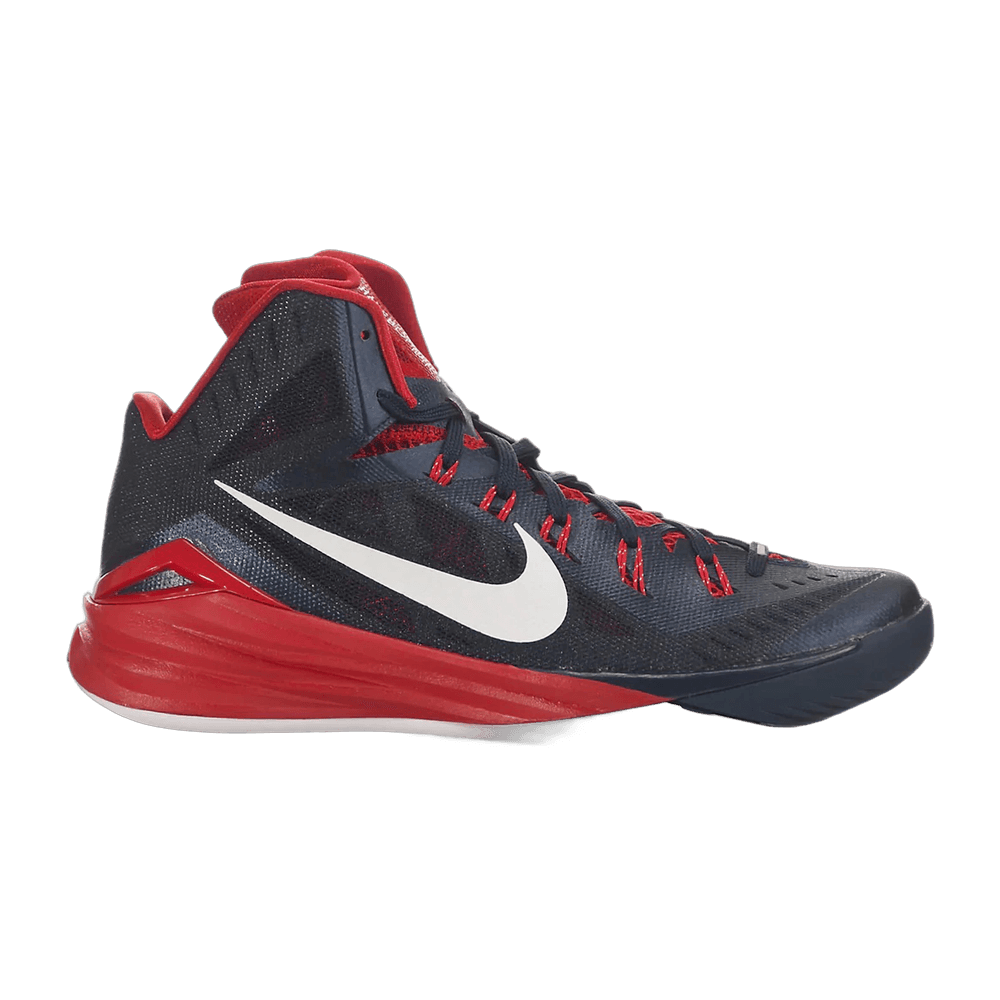
Analysis
Performance profile
| Cushioning Feel | 82 / 100 · Very Good |
|---|---|
| Court Feel | 82 / 100 · Very Good |
| Bounce | 58 / 100 · Solid |
| Stability | 74 / 100 · Good |
| Traction | 88 / 100 · Excellent |
| Fit | 96 / 100 · Elite |
Cushioning Feel
82Court Feel
82Bounce
58Stability
74Traction
88Fit
96Is it for you?
If you like a light, flexible do-everything team shoe that fits many players cheaply, and can live with a forefoot so wide that narrow feet swim even with the laces cinched, then this shoe is for you.
Forefoot midsole tech
forefoot Lunarlon / Zoom-supported front ride
Heel midsole tech
heel Lunarlon / supportive rear platform
Outsole tech
pressure-mapped outsole with great bite
Upper tech
Hyperfuse/Flywire upper
Cushioning feel
comfortable and smooth
Court feel
good
Bounce
moderate
Stability
good
Traction
very good
Fit
secure, supportive, well-rounded
Pro reviews
Paraphrased highlights from sneaker reviewers — not verbatim quotes.
No pro reviews yet
Context
Story & provenance
Late-Classic Team Benchmark
Hyperdunk 2014 released in 2014 as the polished late-classic Hyperdunk before the line's later reinventions. Nike built it around a balanced tool for nearly any role, combining reliable traction, enough cushion and a stable chassis, which says a lot about where the line and the player were at that moment. In community memory, the pair is usually discussed for its reputation as one of the safer team-shoe recommendations of the era. That makes it important beyond simple specs: it captures a specific phase of Nike Basketball thinking about cushioning, containment, weight, durability and visual identity. Collectors still bring it up when later models move in a different direction, and performance-minded hoopers still use it as a reference point for how Hyperdunk became the answer for players who wanted performance first and branding second.
Your rating
Rate every dimension to save
- Cushioning feel0.0
- Court feel0.0
- Bounce0.0
- Stability0.0
- Traction0.0
- Fit0.0
Sign in to rate
Smart size advisor
PremiumSign in and, with your foot scan, Pro/Max works out exactly what size to buy in this shoe.
Log in