
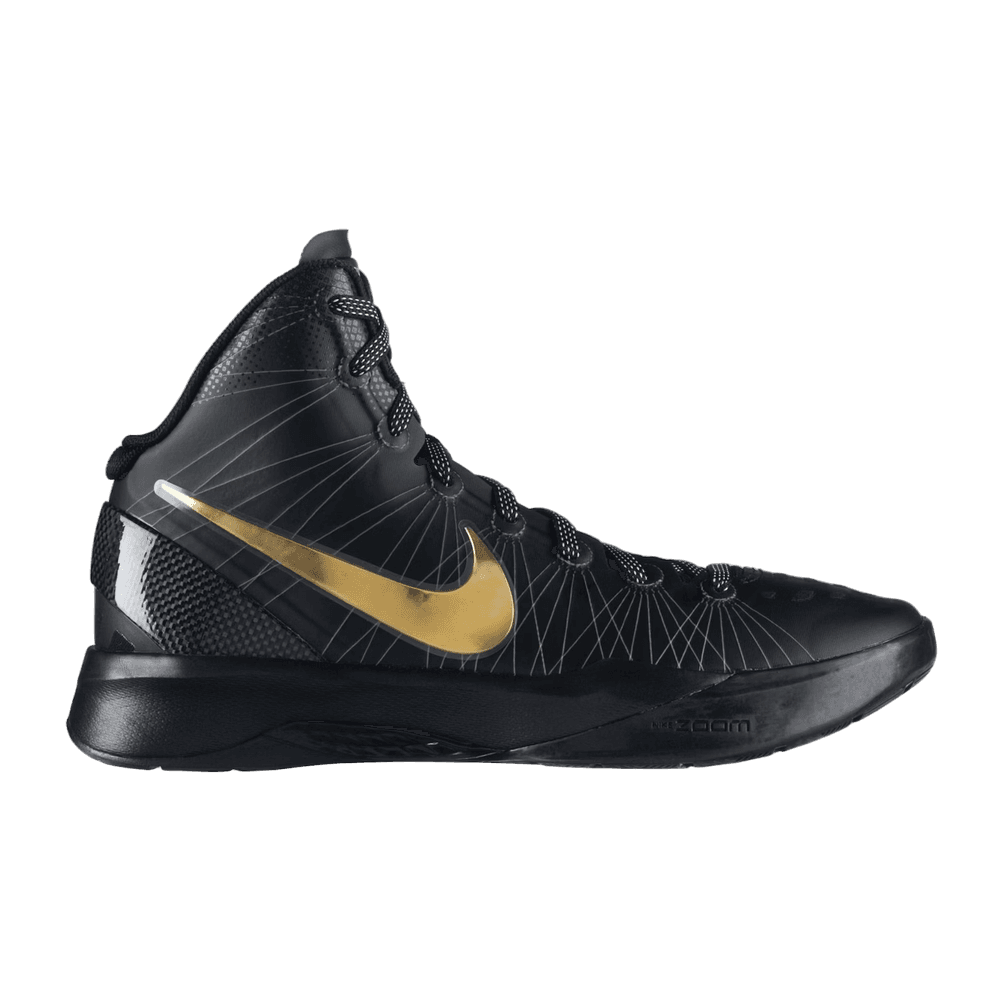
Analysis
Performance profile
| Cushioning Feel | 83 / 100 · Very Good |
|---|---|
| Court Feel | 82 / 100 · Very Good |
| Bounce | 58 / 100 · Solid |
| Stability | 74 / 100 · Good |
| Traction | 88 / 100 · Excellent |
| Fit | 84 / 100 · Very Good |
Cushioning Feel
83Court Feel
82Bounce
58Stability
74Traction
88Fit
84Is it for you?
If you like the light-yet-secure, do-everything team-shoe balance with responsive Zoom, and can live with a narrow last and stiff Fuse upper that needs breaking in, bad for wide feet, then this shoe is for you.
Forefoot midsole tech
forefoot Zoom Air
Heel midsole tech
heel Zoom Air / Phylon carrier
Outsole tech
pressure-mapped traction
Upper tech
Fuse upper with Flywire
Cushioning feel
responsive and balanced
Court feel
good
Bounce
moderate
Stability
good
Traction
very good
Fit
secure and widely trusted
Pro reviews
Paraphrased highlights from sneaker reviewers — not verbatim quotes.
No pro reviews yet
Context
Story & provenance
Benchmark Team Performer
Hyperdunk 2011 released in 2011 as the start of the Hyperdunk's mature performance era. Nike built it around Nike pushed the line toward dependable all-position utility, giving teams and serious hoopers a go-to non-signature option, which says a lot about where the line and the player were at that moment. In community memory, the pair is usually discussed for its excellent all-around playability and broad use across levels. That makes it important beyond simple specs: it captures a specific phase of Nike Basketball thinking about cushioning, containment, weight, durability and visual identity. Collectors still bring it up when later models move in a different direction, and performance-minded hoopers still use it as a reference point for how Hyperdunk earned a reputation as Nike's benchmark team performance line.
Your rating
Rate every dimension to save
- Cushioning feel0.0
- Court feel0.0
- Bounce0.0
- Stability0.0
- Traction0.0
- Fit0.0
Sign in to rate
Smart size advisor
PremiumSign in and, with your foot scan, Pro/Max works out exactly what size to buy in this shoe.
Log in