Log in or sign up for the full sneakerfeature experience.
adidas · 2001
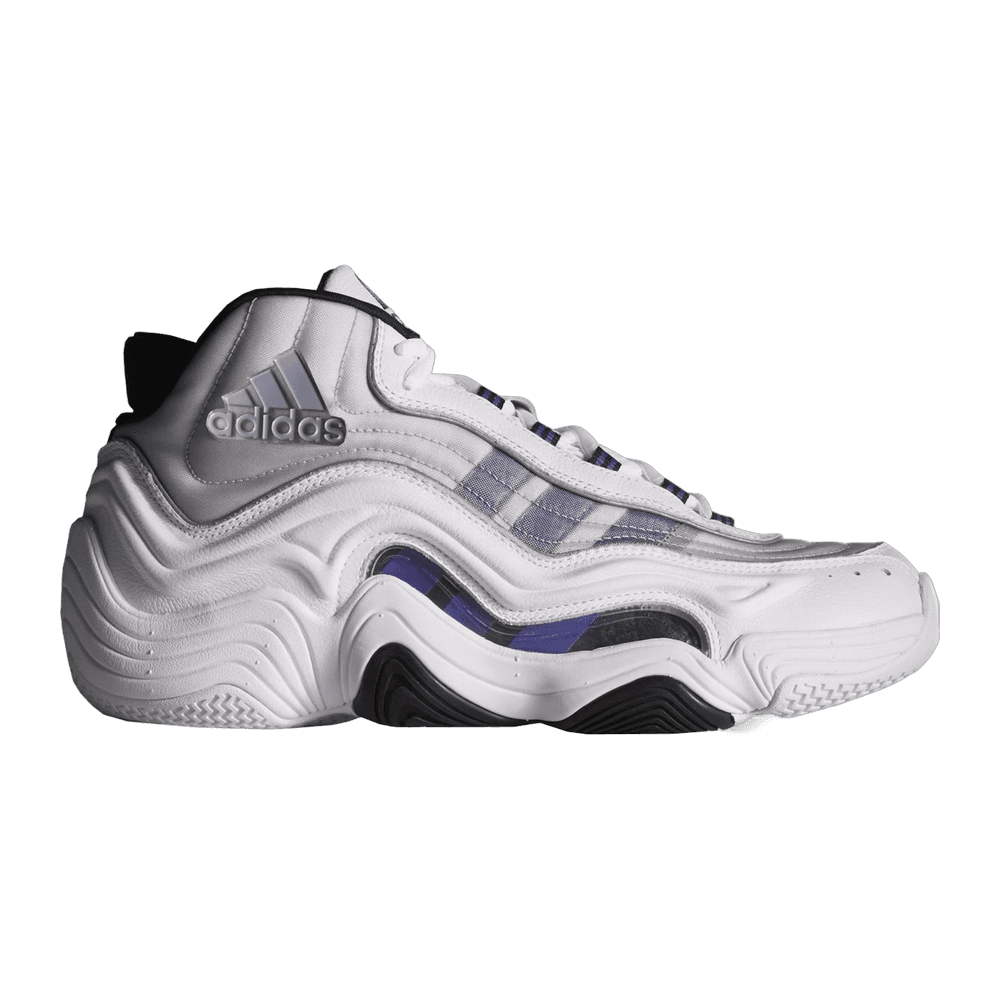
Crazy 2
No playstyle summary available yet.
1.5
By dimension
Cushioning feel
1.0
Court feel
1.5
Bounce
1.0
Stability
3.5
Traction
2.0
Fit
5.0
Analysis
Performance profile
Performance scores
Cushioning Feel
45 / 100 · Decent
Court Feel
64 / 100 · Solid
Bounce
40 / 100 · Decent
Stability
88 / 100 · Excellent
Traction
72 / 100 · Good
Fit
97 / 100 · Elite
Cushioning Feel
45Decent
Court Feel
64Solid
Bounce
40Decent
Stability
88Excellent
Traction
72Good
Fit
97Elite
Is it for you?
If you like the low-to-the-ground, close court feel, and can live with weak indoor traction that slips on any dust, then this shoe is for you.
the low-to-the-ground, close court feel
weak indoor traction that slips on any dust
Forefoot midsole tech
adiPRENE+ forefoot
Heel midsole tech
adiPRENE heel
Outsole tech
Rubber traction with segmented herringbone-style coverage
Upper tech
Molded synthetic shell upper with inner sleeve and leather accents
Cushioning feel
Firm-supportive
Court feel
Moderate
Bounce
Low-moderate
Stability
Very good
Traction
Good
Fit
Very structured and secure
Pro reviews
Paraphrased highlights from sneaker reviewers — not verbatim quotes.
YouTube1 / 3
WearTesters
The Crazy 2 is a bold 2001 innovation that Adidas has carefully recreated with authentic packaging and upgraded internals. A must-see for sneaker history enthusiasts, though its avant-garde design may not resonate with general audiences.
High-fidelity packaging and detail recreation - Adidas faithfully reproduced the 2001 original packaging including cardboard sleeve, handle, and combined logo design
Upgraded internal technology - Uses protro/resto mod approach to improve functionality while preserving the authentic 2001 aesthetic and silhouette
Divisive and futuristic design - The shoe's unique shape (described as "a ninja turtle missing a toe") represents peak early-2000s spaceship-era footwear that may not appeal to mainstream consumers
Negative historical significance - This shoe directly caused Kobe to buy out his contract with Adidas, marking a failed partnership and controversial moment in sneaker history
The Crazy 2 represents a bold Adidas-Kobe collaboration with historical significance, but its controversial design and short partnership lifespan led to Kobe's legendary transition to Nike
Significant historical value as it was first worn during the 2001-2002 NBA season opener as tribute to 9/11 victims, carrying deep social meaning
Futuristic and bold design with distinctive stars and stripes pattern; recent retro releases in OG colorways show strong demand among collectors and basketball fans
Controversial and unorthodox style that drew criticism alongside attention, failing to achieve universal acceptance
Brief partnership between Adidas and Kobe; he paid $9 million to exit the deal and sign with Nike instead, indicating the shoe line could not sustain long-term collaboration
Crazy 2 is a historically significant retro sneaker with bold distinctive design but performance far unsuitable for contemporary basketball; better suited for collection than on-court play
Unique and iconic design inspired by Audi TT Roadster with significant basketball history (Kobe's first NBA championship shoe
Decent traction with herringbone pattern that works well indoors, provides good torsional support
Outdated performance with brick-like cushioning lacking compression and smooth transition, heavy shoe (466g for size 10) unable to complete full five-on-five game
Bulky and inflexible construction, impractical loose laces, stiff upper panels, overall doesn't meet modern basketball performance standards
The Crazy 2 is a bold 2001 innovation that Adidas has carefully recreated with authentic packaging and upgraded internals. A must-see for sneaker history enthusiasts, though its avant-garde design may not resonate with general audiences.
High-fidelity packaging and detail recreation - Adidas faithfully reproduced the 2001 original packaging including cardboard sleeve, handle, and combined logo design
Upgraded internal technology - Uses protro/resto mod approach to improve functionality while preserving the authentic 2001 aesthetic and silhouette
Divisive and futuristic design - The shoe's unique shape (described as "a ninja turtle missing a toe") represents peak early-2000s spaceship-era footwear that may not appeal to mainstream consumers
Negative historical significance - This shoe directly caused Kobe to buy out his contract with Adidas, marking a failed partnership and controversial moment in sneaker history
The Crazy 2 represents a bold Adidas-Kobe collaboration with historical significance, but its controversial design and short partnership lifespan led to Kobe's legendary transition to Nike
Significant historical value as it was first worn during the 2001-2002 NBA season opener as tribute to 9/11 victims, carrying deep social meaning
Futuristic and bold design with distinctive stars and stripes pattern; recent retro releases in OG colorways show strong demand among collectors and basketball fans
Controversial and unorthodox style that drew criticism alongside attention, failing to achieve universal acceptance
Brief partnership between Adidas and Kobe; he paid $9 million to exit the deal and sign with Nike instead, indicating the shoe line could not sustain long-term collaboration
Crazy 2 is a historically significant retro sneaker with bold distinctive design but performance far unsuitable for contemporary basketball; better suited for collection than on-court play
Unique and iconic design inspired by Audi TT Roadster with significant basketball history (Kobe's first NBA championship shoe
Decent traction with herringbone pattern that works well indoors, provides good torsional support
Outdated performance with brick-like cushioning lacking compression and smooth transition, heavy shoe (466g for size 10) unable to complete full five-on-five game
Bulky and inflexible construction, impractical loose laces, stiff upper panels, overall doesn't meet modern basketball performance standards
Released in 2001, Crazy 2 arrived in the post-Kobe adidas shell era, where futuristic molded construction remained central to the brand's design language. The design intent centered on creating a sculpted lockdown shoe with a stable base and a hard-driving feel. Notable versions or talking points included its spaceship-like shell and strong retro curiosity value. In community memory, the shoe is usually remembered for containment and support over softness or breathability. It also helps mark a specific turning point inside that line, because the shoe shows what the brand prioritized at that moment rather than simply copying the previous release.